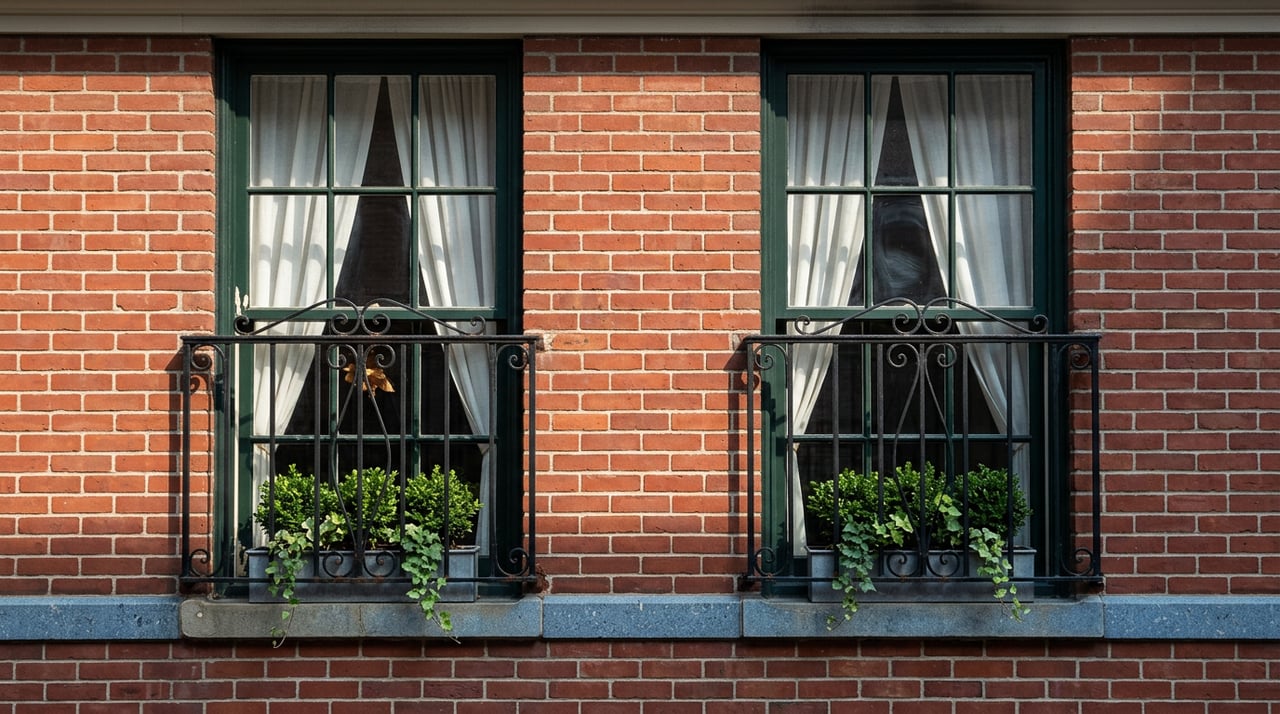
The story of the West Village in summer 2026 is not a scattered map of openings. It is a three-block spine. Almost every meaningful new arrival this spring landed on Bleecker, Hudson, or 8th Avenue between Christopher and West 13th, and the season's biggest cultural anchor, Little Island, is opening later than it has in years. The result for anyone who already lives here is a summer that starts quietly on the streets and then swings hard toward the river after July 29.
That is a different rhythm than the last two summers, and it is worth planning around.
The corridor doing the work
Six or seven blocks are absorbing the entire spring's activity. If you walked from the corner of Bleecker and Christopher north to 8th Avenue, you would pass every new lease that matters this season.
- Cleo, 621 Hudson Street. A new neighborhood rotisserie restaurant, Cleo, opened April 17, 2026, at 621 Hudson Street from Halley Chambers and Kip Gleize of Three Top Hospitality, the team behind Margot and Montague Diner. The kitchen is led by Chef Juliana Latif, who blends Mediterranean and Middle Eastern influences, and the menu focuses on marinated 24-hour rotisserie chicken served with zhug, labneh ranch, and spicy red sauce. Reservations are released two weeks in advance at 10 a.m., and the room saves space for walk-ins.
- Yesterday's, 157 Bleecker Street. A two-level, 6,500-square-foot bar and restaurant designed by New York-based Yakka Studio, with warm lighting, wood finishes, banquette seating, disco balls, and an expansive bar anchoring the room. It opened April 10, 2026, and runs late — until 4 a.m. on Fridays and Saturdays. Wood-fired pizzas are on all day; the beverage program is led by Jarrod Fox and Jon Greenfield.
- Keepers, 34 8th Avenue. From the team behind the nearby Dandelion, taking over the former Arthur & Sons Italian American Club and serving tavern-style pizza and strong drinks, with a name that nods to the barkeepers and tavern keepers of old New York.
- Le Sixth. A West Village bistro from a French chef who previously worked in Hong Kong, with classics like sole Grenobloise and steak frites, and a brunch menu built around French omelets, benedicts, and chicken paillard.
- A Zimmi's sequel, next door on Bedford. Zimmi's, the Southern French bistro that opened about a year ago, is opening a small cafe next door on Bedford Street with small plates, an extensive wine program, and sweet and savory pastries.
Read that list in one pass and a pattern shows up. Four of the five are second projects from teams that already run a room in the neighborhood or one very close to it. Three Top Hospitality already had Margot. Dandelion is around the corner from Keepers. Zimmi's sequel is quite literally next door to the original. This is not new capital arriving from outside; it is operators doubling down on ground they already understand. For a resident, that has a practical meaning: the service culture at these places is imported from restaurants you may already have opinions about, not built from scratch.
It also explains the geography. Operators expanding within a five-minute walk are not shopping for cheap rent in some emerging block. They are betting that the same customer, the one already walking Bleecker, will accept a second offering under a different sign. That is a bet on foot traffic, and it says something about how the corridor is behaving in 2026.
A cookie shop is the exception that confirms the pattern
Bleecker's other recent tenant is Crumbl, at 195 Bleecker, part of a national chain out of Utah. The West Village location is open 8 a.m. to midnight on Fridays and Saturdays and closed on Sundays. Its presence next to Cleo and Yesterday's is not a contradiction; it is a barometer. When a rent roll can support both an independent French bistro's second cafe and a rotating-menu cookie chain, the street is functioning as a genuine retail corridor rather than a curated one. Residents who remember Bleecker's post-2015 vacancy stretch will recognize what full occupancy looks like, and what it costs in the character mix.
The July 29 pivot
Then the river opens.
Little Island's 2026 season runs July 29 through September 6, produced on a later timeline than the past two sell-out seasons. The season includes 56 performances by more than 200 artists across The Amph and The Glade, with $25 tickets at The Amph, free programming at The Glade and The Play Ground, and food and cocktails served al fresco on the Hudson.
The compression matters. Previous seasons stretched from June into September. This one packs the same volume of programming into six weeks. If you are the kind of resident who used to drift over on a Wednesday in mid-June, that window no longer exists. If you have out-of-town guests coming through in early July, Little Island is not the plan. The neighborhood's evening center of gravity shifts west toward Pier 55 later than usual, and it shifts harder.
The lineup itself is worth reading closely rather than skimming:
| Dates | Venue | Show |
|---|---|---|
| July 29–31 | The Amph | Justin Vivian Bond: Summer's Eve, a brand-new cabaret act |
| August 1 | The Amph | Qween Jean: Summer Legacy Ball, one night only, free tickets |
| August 5–9 | The Amph | Anthony Roth Costanzo: Minimalism, with mezzo Rachael Wilson and Sandbox Percussion |
| August 12–16 | The Amph | Cécile McLorin Salvant's Tin Pan Alley |
| August 19–23 | The Amph | Louis Cato's The Harlem Renaissance |
| August 21–23 | The Glade | Ghetto Gastro: Red Rice, free, with a Teranga food pop-up serving Joloff bowls |
| August 27–30 | The Amph | Julio Torres and Martine Gutierrez: Marina, a world premiere underwater fairytale |
| September 2–6 | The Amph | Thomas Bartlett's Allen Ginsberg at 100, with Rufus Wainwright (Sep 2) and Bill Frisell (Sep 3) |
Two things stand out. First, the Ginsberg centennial closes the season on Labor Day weekend, which is a deliberate choice. Ginsberg lived and read in this neighborhood for decades. Programming him last, on the water, on the weekend most of the city has already gone quiet, is a curatorial move by residents for residents. Second, the free tier is not filler. Qween Jean's Summer Legacy Ball is free. The Ghetto Gastro run at The Glade is free. If your calendar is tight and you want one night, August 1 or the Glade dates are the ones to hold.
The park's entrance sits off the Hudson River Greenway near West 13th Street, a short walk from the High Line and the 14 Street subway stations. For most West Village addresses south of 14th, that is a ten-minute walk. For anyone north of Bank Street, it is closer to five.
A weeknight worth stringing together
Here is what the corridor gives you when you combine both stories.
Early July, before the island opens, is the moment to catch the new rooms while they are still finding their footing. Cleo at 5 p.m. is reportedly not the line-out-the-door scene you might expect from a spring opening; the restaurant does not have a bar, but saves room for walk-ins, and shortly after a 5 p.m. opening a line has not been the case. That will change. It always does on Hudson.
After July 29, the pattern flips. A weeknight becomes: an early drink at Keepers on 8th, a pizza at Yesterday's if the room is not booked, then west across Washington Street toward the river for an 8:30 show. On a free Glade night, that same walk costs $0 for the performance. In a neighborhood where a Wednesday dinner-and-a-show can quickly clear $200 a person, a $25 Amph ticket or a free Glade set is the anomaly worth building around.
For residents who have watched Bleecker cycle through vacancy, national chains, and revival attempts over the last decade, the summer 2026 read is straightforward. The street is being edited by operators who already live in it professionally, and the river is programming a compressed, high-density August. Neither of those is a headline. Together they are the shape of the season.
If you are thinking about your own move within the neighborhood, or weighing what a West Village address delivers on a Tuesday in August, Eileen Foy has spent three decades reading these blocks and the buildings behind them. Request a private consultation when you are ready to talk.